在Python開發(fā)中,設(shè)計模式是提高代碼質(zhì)量和可維護(hù)性的重要手段。本文將深入探討單例模式和橋接模式在Python中的實現(xiàn)與應(yīng)用。
單例模式
概念解析
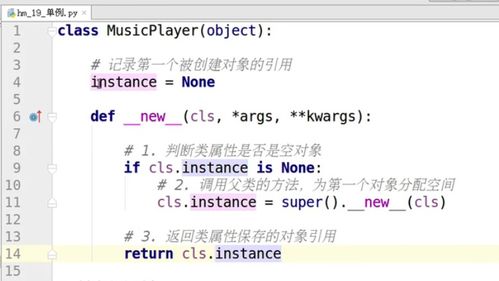
單例模式是一種創(chuàng)建型設(shè)計模式,確保一個類只有一個實例,并提供一個全局訪問點。
Python實現(xiàn)方式
1. 模塊級單例`python
class Singleton:
def init(self):
self.value = None
singleton_instance = Singleton()`
2. 裝飾器實現(xiàn)`python
def singleton(cls):
instances = {}
def wrapper(args, kwargs):
if cls not in instances:
instances[cls] = cls(args, kwargs)
return instances[cls]
return wrapper
@singleton
class Database:
def init(self):
self.connection = None`
3. 元類實現(xiàn)`python
class SingletonMeta(type):
instances = {}
def call(cls, *args, kwargs):
if cls not in cls.instances:
cls.instances[cls] = super().call(*args, kwargs)
return cls.instances[cls]
class Logger(metaclass=SingletonMeta):
def init(self):
self.log_file = 'app.log'`
應(yīng)用場景
- 數(shù)據(jù)庫連接池
- 配置管理器
- 日志記錄器
- 線程池
橋接模式
概念解析
橋接模式是一種結(jié)構(gòu)型設(shè)計模式,將抽象部分與實現(xiàn)部分分離,使它們可以獨立變化。
核心結(jié)構(gòu)
- 抽象化角色:定義抽象接口
- 修正抽象化角色:擴(kuò)展抽象化接口
- 實現(xiàn)化角色:定義實現(xiàn)類的接口
- 具體實現(xiàn)化角色:實現(xiàn)實現(xiàn)化接口
Python實現(xiàn)示例
`python
from abc import ABC, abstractmethod
實現(xiàn)化接口
class DrawingAPI(ABC):
@abstractmethod
def draw_circle(self, x, y, radius):
pass
具體實現(xiàn)化A
class DrawingAPI1(DrawingAPI):
def draw_circle(self, x, y, radius):
print(f"API1.circle at ({x},{y}) radius {radius}")
具體實現(xiàn)化B
class DrawingAPI2(DrawingAPI):
def draw_circle(self, x, y, radius):
print(f"API2.circle at ({x},{y}) radius {radius}")
抽象化
class Shape(ABC):
def init(self, drawingapi):
self.drawingapi = drawingapi
@abstractmethod
def draw(self):
pass
修正抽象化
class CircleShape(Shape):
def init(self, x, y, radius, drawingapi):
super().init(drawingapi)
self.x = x
self.y = y
self.radius = radius
def draw(self):
self.drawingapi.drawcircle(self.x, self.y, self._radius)
客戶端代碼
api1 = DrawingAPI1()
api2 = DrawingAPI2()
circle1 = CircleShape(1, 2, 3, api1)
circle2 = CircleShape(5, 7, 11, api2)
circle1.draw() # 輸出: API1.circle at (1,2) radius 3
circle2.draw() # 輸出: API2.circle at (5,7) radius 11`
優(yōu)勢
- 解耦抽象與實現(xiàn):兩者可以獨立擴(kuò)展
- 開閉原則:對擴(kuò)展開放,對修改封閉
- 單一職責(zé)原則:每個類專注于自己的職責(zé)
應(yīng)用場景
- 跨平臺UI開發(fā)
- 數(shù)據(jù)庫驅(qū)動程序
- 不同格式的文件處理器
- 多種渲染引擎的圖形應(yīng)用
模式對比與結(jié)合使用
單例模式關(guān)注對象的創(chuàng)建過程,確保全局唯一性;橋接模式關(guān)注對象的結(jié)構(gòu)設(shè)計,實現(xiàn)抽象與實現(xiàn)的分離。在實際項目中,這兩種模式可以結(jié)合使用,例如使用單例模式管理橋接模式中的具體實現(xiàn)類。
總結(jié)
單例模式和橋接模式都是Python中常用的設(shè)計模式,各有其適用場景。單例模式確保資源的全局唯一性,橋接模式提供靈活的架構(gòu)設(shè)計。理解并正確應(yīng)用這些模式,將顯著提升Python項目的設(shè)計質(zhì)量和可維護(hù)性。